
Interior finishing / Greater Boston
Plastering & Skim Coats
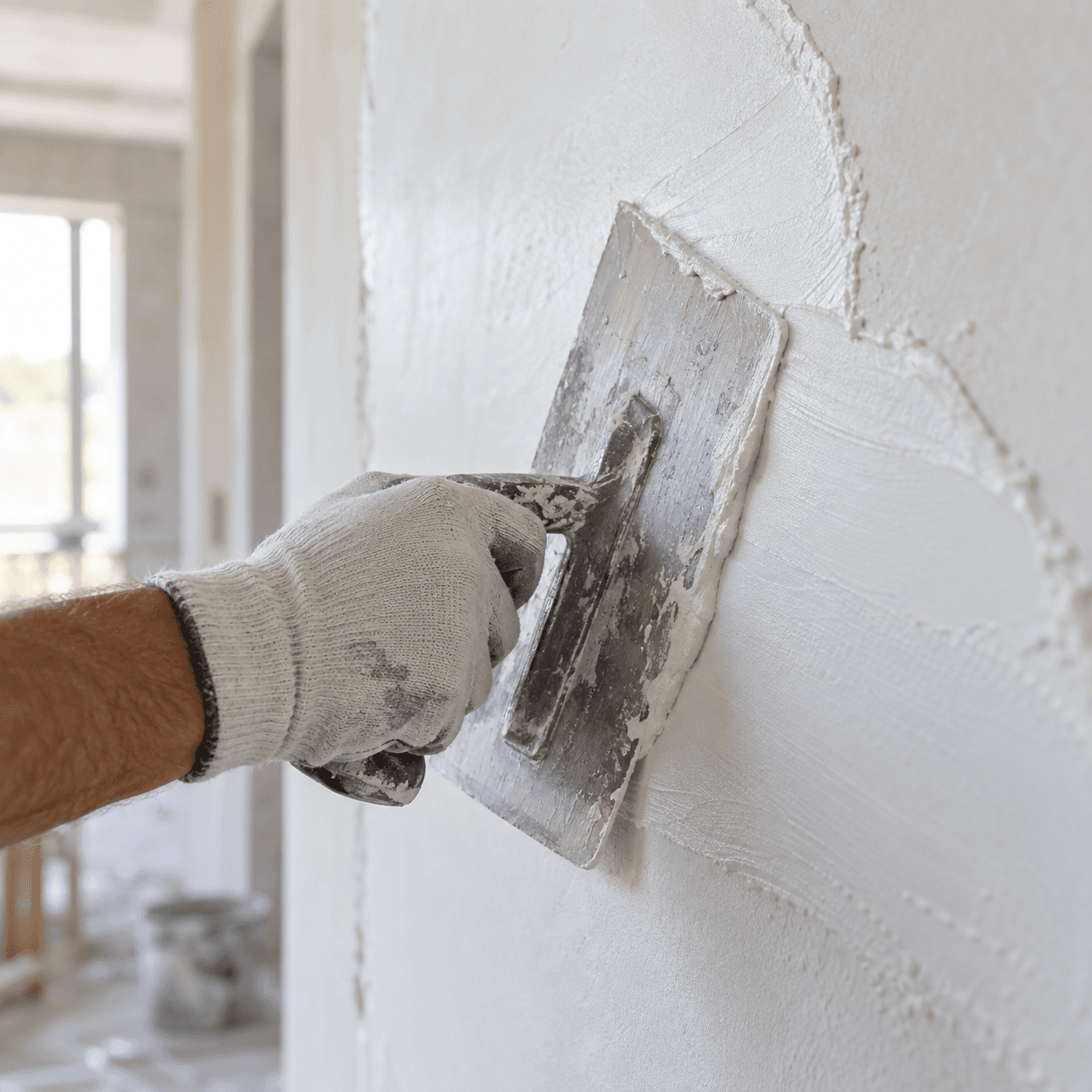
A good plaster finish starts with the surface underneath it. We review the board or existing plaster, the room's light and the intended paint finish before recommending a compatible system. New veneer plaster over blue board and resurfacing an existing wall are different jobs; the estimate explains which approach your room needs.
Is this the right service?
Uneven finishes, exposed new board and worn interior surfaces that need a continuous finish before decorating.
- New blue board walls or ceilings are ready for veneer plaster.
- A renovation joins new surfaces to sound existing plaster.
- Room-wide imperfections make individual patches impractical.
What we review in your scope
The written estimate identifies the surfaces, preparation and finishing stages included in your project.
- Substrate assessment and room protection
- Compatible bonding and joint preparation
- Plaster application and detail finishing
- Cleanup and review of the finished area
From preparation to handoff
How the work is carried out
- 01
Inspect the base for secure attachment, contamination and moisture; identify preparation required before coating.
- 02
Protect adjoining finishes and prepare joints, corners and bonding surfaces for the selected plaster system.
- 03
Apply the specified base and finish coats, working around openings and feathering agreed transitions.
- 04
Review the surface after drying and explain primer and painting requirements for the chosen materials.
What affects the estimate?
A price based only on room size can miss important preparation. These details help define a comparable, realistic scope:
- Existing substrate condition and bonding preparation
- Wall area, ceiling height and access
- Number of corners, openings and transitions
- Whether primer and painting are included
Before your assessment
Share photos of each wall, the ceiling and any loose or damp areas. Let us know whether the room will remain occupied and whether you are keeping the existing trim.
Timing & finish expectations
The work sequence depends on the selected plaster system, room conditions and required preparation. Setting is not the same as drying; painting starts only when the substrate and coating instructions permit it.
- A continuous finish across the agreed wall or ceiling area.
- Careful transitions at trim, openings and adjacent surfaces.
- A defined handoff to the painting stage.
Discuss access, occupied rooms and the work of other trades before scheduling. Any additional preparation discovered on site should be discussed before the scope changes.
Questions about plastering & skim coats
Is plastering the same as skim coating?
Plastering can involve a new plaster system over an appropriate base. Skim coating resurfaces an existing sound wall with thin finishing coats. We assess the base before choosing materials.
Does the estimate include paint?
The written scope should state whether the handoff is a finished surface, primed surface or a fully painted room. Ask for painting to be included if you want one coordinated finish.
Can you plaster over an existing painted wall?
Sometimes, after checking adhesion and preparing the surface. Loose paint, damp areas and unstable plaster must be addressed before a new coat is applied.
Related work for your project
Skim Coating & Resurfacing
Full-surface preparation and thin finishing coats for worn, patched or uneven interior walls.
View serviceBlue Board Installation
Gypsum plaster-base installation prepared for a compatible veneer plaster system.
View serviceInterior Painting
Surface preparation, priming and interior painting for repaired walls, ceilings and complete rooms.
View servicePlanning a project in Massachusetts?
Explore our service areas →